

Feb 20, 2026
Are There Braces That Go Behind Your Teeth? A Guide to Lingual Braces
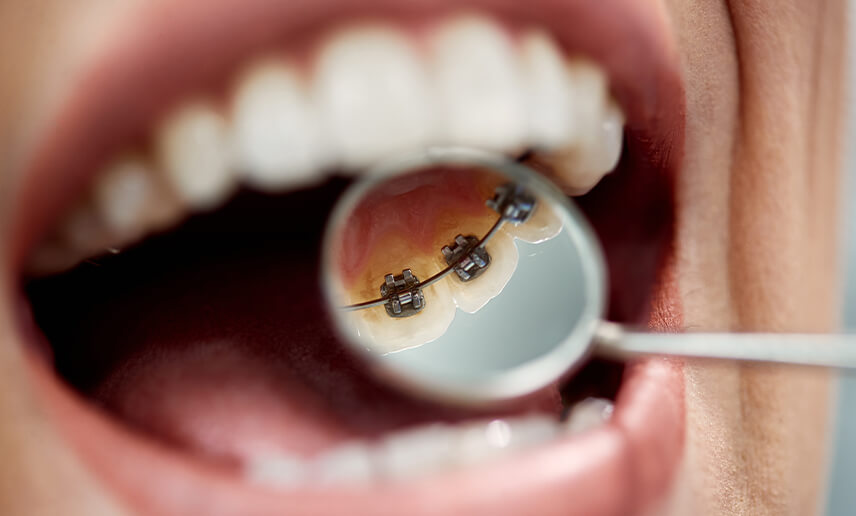
If you are searching for truly hidden braces, you are likely thinking about appliances that sit behind your teeth. Yes, they exist, and they are called lingual braces.
Lingual braces can be a great choice if you want comprehensive, Specialist Orthodontist-led tooth movement without visible brackets. They are especially popular with adults who present, teach, perform or simply prefer to keep treatment discreet.
In this guide, we explain what lingual braces are, how they work, who they suit best and how they compare with traditional fixed braces and Invisalign®. We also share practical care tips so you can feel comfortable and confident from day one.
What lingual braces are and how they work
Lingual braces are fixed braces bonded to the inner, tongue-side surfaces of your teeth. Like traditional braces, they use small brackets and a wire to move teeth precisely. The key difference is location, which makes them invisible in everyday photos, video calls and face-to-face conversations.
At Northern Orthodontics, the process begins with 3D intraoral scanning, digital planning and custom prescription brackets. The digital workflow means each bracket pad and wire sequence can be tailored to your tooth shape and movement goals. This custom approach often improves comfort and efficiency once you have adjusted to the appliance.
To move your teeth safely, your Specialist Orthodontist will schedule periodic adjustments. We also use AI-assisted remote monitoring for eligible patients so progress can be reviewed between visits, reducing in-person appointments while maintaining clinical oversight.
The benefits of lingual braces
Truly hidden from the front
Because brackets sit behind your teeth, most people will not see your braces.
Custom digital design
3D scanning and bespoke bracket bases support precise control over tooth movement and finishing.
Comprehensive correction
Suitable for many bite issues, rotations and vertical changes that can be more complex with aligners alone.
No enamel staining on the front surfaces related to brackets
Good hygiene is still essential, but any bonding marks are on the inside.
The trade-offs to consider
Tongue awareness and mild irritation at first
Your tongue sits close to the brackets, so it may feel tender for 1 to 2 weeks. Orthodontic wax and salt-water rinses help.
Temporary speech changes
A light lisp can occur in the first few days. Most patients adapt with simple reading-aloud practice.
Cleaning technique
Brushing and interdental cleaning need to be diligent because the appliance is harder to see and reach.
Appointment rhythm
Visits are typically similar in frequency to front-of-tooth braces. Remote monitoring can reduce travel for some patients.
Who is a good candidate?
Lingual braces suit adults and teens who want comprehensive treatment with maximum discretion. They are helpful if you:
- Present or perform professionally, or prefer not to show braces in photos
- Have complex crowding, rotations or bite issues where a fixed system offers biomechanical advantages
- Are willing to commit to careful oral hygiene and a short adaptation period
They may not be ideal if you have pronounced tongue posture challenges, a very deep overbite that risks early bracket contact or if you prefer a removable option for eating and cleaning. Your Specialist Orthodontist will assess your bite, enamel health and lifestyle to recommend the best approach.
Lingual braces vs traditional braces vs Invisalign®
All three systems can move teeth effectively when planned and supervised well. The right choice balances visibility, comfort, hygiene preferences and biomechanics.
Visibility
Lingual braces are invisible from the front. Traditional metal or ceramic braces are visible, though ceramic brackets blend with tooth colour. Invisalign® aligners are clear and low profile, but attachments can sometimes be seen up close.
Comfort
Traditional braces can irritate lips and cheeks; lingual braces can irritate the tongue early on. Invisalign® has smooth edges, but you must wear aligners as directed for predictable results.
Eating and cleaning
Fixed systems remain in place to eat, so you will adjust food choices and clean carefully after meals. With Invisalign®, you remove aligners to eat and must brush before reinserting them.
Complexity and control
For certain rotations, root positioning and bite corrections, fixed appliances, including lingual braces, offer robust control. Aligners can manage many cases well, especially with digital refinements, but suitability varies.
Appointments and monitoring
All systems require reviews. With digital scans and AI-assisted monitoring, we can often space in-person visits a little further apart for eligible patients across systems.
If you are comparing options, you can explore our discreet fixed alternatives or clear aligners to see what fits your routine.
Learn more about Invisalign® in Manchester, including how the system works and suitability, by visiting our Invisalign page.
Considering a fully hidden fixed option in the city? Read about lingual braces in Manchester.
Practical care tips for comfort and hygiene
The first fortnight is an adaptation phase. Small daily habits make a big difference.
For comfort
Use orthodontic wax on any sharp-feeling bracket. Rinse with warm salt water after meals. Take over-the-counter pain relief if advised by your pharmacist. Practise speaking aloud for 5 to 10 minutes daily to speed speech adaptation.
For eating
Choose soft foods at first such as eggs, yoghurt, soups and pasta. Cut firm foods small. Avoid hard, sticky and very chewy items that can catch on the wire.
For cleaning
Angle your toothbrush towards the gumline and under the wire. Add interdental brushes for the bracket areas. Consider a fluoride mouthwash once daily at a different time from brushing. Carry a travel brush for work or school. Rinse with water after snacks if you cannot brush immediately.
For sport
Wear a well-fitted mouthguard. Ask us about custom sports mouthguards made from digital scans if you play contact or ball sports.
Appointment frequency and what to expect
Most patients attend regular adjustment visits set by clinical need, often every 6 to 10 weeks, though this can vary. With our digital workflow and Dental Monitoring, we can review progress from home between visits for suitable cases.
If a bracket loosens or a wire feels sharp, contact us. Please do not try to bend or cut anything yourself.
Our digital orthodontics and custom design
Northern Orthodontics is a digital-first clinic. We use 3D intraoral scanning for accurate impressions, plan tooth movement digitally and design custom appliances, including lingual systems, to streamline fitting and finishing.
For aligner patients, we also offer NorthoClear alongside Invisalign®, giving you a full range of choices with Specialist Orthodontist oversight.
If you are researching discreet options generally, you can also compare our clear braces for a front-of-tooth but low-visibility alternative.
FAQs
Are there braces that go behind your teeth?
Yes. Lingual braces are fitted to the inside surfaces, so they are hidden from the front.
What are the pros and cons of lingual braces?
Pros include true front-view invisibility, custom digital design and comprehensive correction. Cons include short-term tongue irritation, brief speech adaptation, more detailed cleaning and routine review visits.
How do lingual braces compare with traditional braces and Invisalign®?
Lingual braces are the most discreet of the fixed options. Traditional braces can be metal or ceramic and are visible, but they are straightforward to clean by sight. Invisalign® is removable for meals and cleaning, but relies on consistent wear and is not invisible at close range.
Who is a good candidate for lingual braces?
Adults and teens seeking maximum discretion and comprehensive correction, who are happy to maintain excellent oral hygiene and adapt over the first 1 to 2 weeks.
Summary
Lingual braces offer fixed-appliance precision with front-view invisibility, making them a strong option for patients who want discretion without compromising control. A short period of tongue awareness and careful hygiene are part of the journey, but with digital planning and supportive monitoring, most patients adapt quickly and achieve predictable outcomes.
Curious whether lingual braces are right for you? Book a free virtual suitability consultation with our Specialist Orthodontist team.